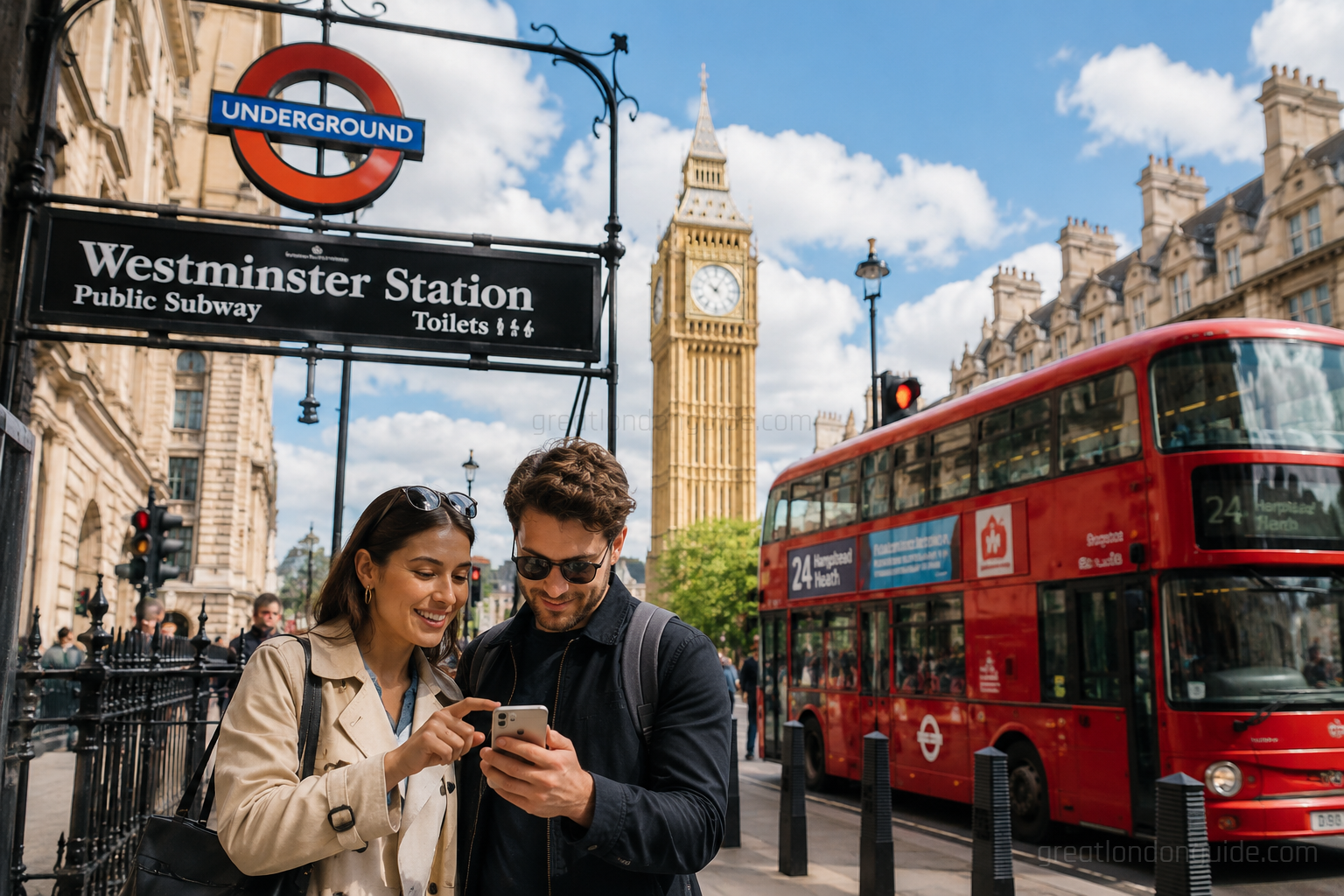
London Transport for First-Time Visitors
If you are visiting London for the first time, there is a very good chance you have already looked at the famous Tube map and thought something along the lines of: “Absolutely not.” At first glance, it can look like a bowl of colorful spaghetti designed by somebody who hated tourists. There are lines everywhere, station names you have never heard of, and enough transport terminology to make you wonder if walking everywhere might somehow be easier.
The good news is that London transport is nowhere near as complicated as it first appears.
In fact, millions of tourists use it successfully every single year, including plenty of people who arrived with the exact same worries you probably have right now. You do not need to memorize the Tube map. You do not need to become a transit expert. You do not need to understand every train line, ticket type, or British transport phrase before you arrive.
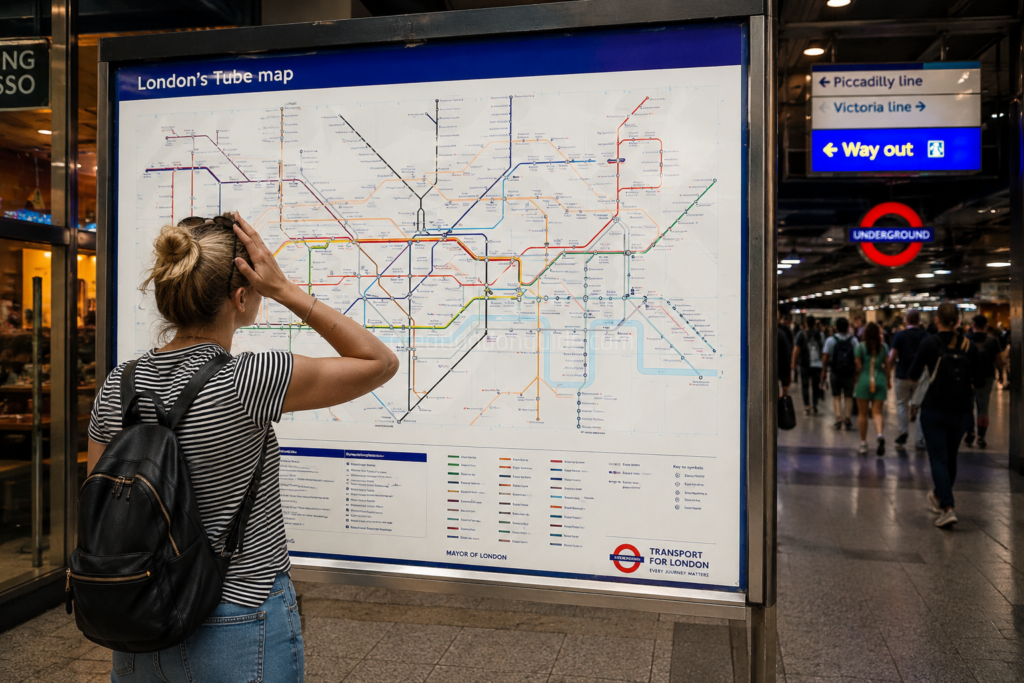
Honestly, most visitors figure out the basics within a day or two.
That is partly because modern apps do a huge amount of the hard work for you now. Between Google Maps, Citymapper, contactless payment, and clear station signs, navigating London is dramatically easier than many people expect. Once you stop looking at the system as one giant confusing puzzle and start treating it as a series of simple little trips, things begin to click very quickly.
And yes, Londoners move fast sometimes. Very fast. Especially during rush hour. You may occasionally feel like somebody behind you could power a small city purely through aggressive walking energy. Do not worry about it. Nobody expects tourists to instantly know everything, and London is one of the most visited cities on Earth. Station staff deal with confused visitors all day long.
This guide is here to simplify the entire experience.
We are going to break down how London transport actually works in plain English, without drowning you in technical rail jargon or making you feel like you need to study for an exam before your vacation. You will learn what the Tube actually is, how buses fit into the system, how to pay for travel, which apps make life easier, how airport connections work, and what you really need to know to move around the city confidently.
You will also learn something important that surprises many first-time visitors: London is often far more walkable than people expect. Some attractions that look distant on the map are only a short stroll apart, especially in central London. Before long, you will probably find yourself naturally combining walking, buses, and the subway system without even thinking much about it.
By the end of this guide, the goal is simple:
London transport should feel manageable instead of intimidating.
Because underneath the famous map, the crowded stations, and the endless escalators, London actually has one of the most useful and connected public transportation systems in the world. Once you understand the basics, it becomes less of a scary mystery and more like an incredibly helpful tool that gives you freedom to explore the city properly.
Understanding London Transport Without Overthinking It

One of the biggest mistakes first-time visitors make is assuming they need to fully “understand the London transport system” before they can use it properly.
You really do not.
You are not studying for a transport engineering degree. You are trying to get from your hotel to Buckingham Palace without accidentally ending up in suburban southeast London wondering where your vacation went wrong.
The good news is that London transport works far more like a connected ecosystem than a collection of separate confusing systems. Once you understand the basic pieces and how they fit together, the city starts making a lot more sense.
And honestly, most tourists only use a fairly small part of the network anyway.
If you are staying in central London and visiting the major attractions, you will probably spend most of your time using a mixture of:
- the Tube (London’s subway system)
- buses
- walking
- maybe one or two train services
- possibly an airport connection
That is really it.
You do not need to master every line, every station, or every transport acronym floating around online. The basics are enough to get around confidently.
What London Transport Actually Includes
One reason London transport looks intimidating is because people keep throwing around different names for different systems. The reality is much simpler than it sounds.
Here are the main things tourists are likely to encounter.
The Tube
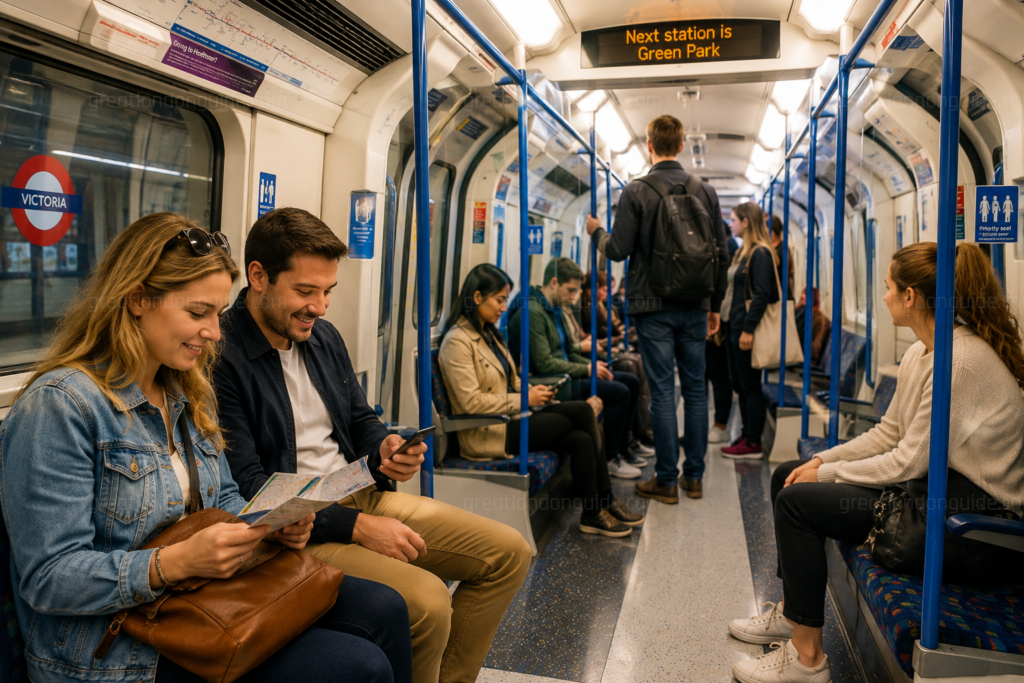
The Tube is London’s subway system and the thing most visitors think about first.
These are the famous underground trains shown on the colorful Tube map. The network spreads across much of the city and is usually the fastest way to move around central London.
If you hear somebody mention:
- the Underground
- the Tube
- the subway
they basically mean the same thing.
The Tube is the backbone of London transport for tourists.
London Buses
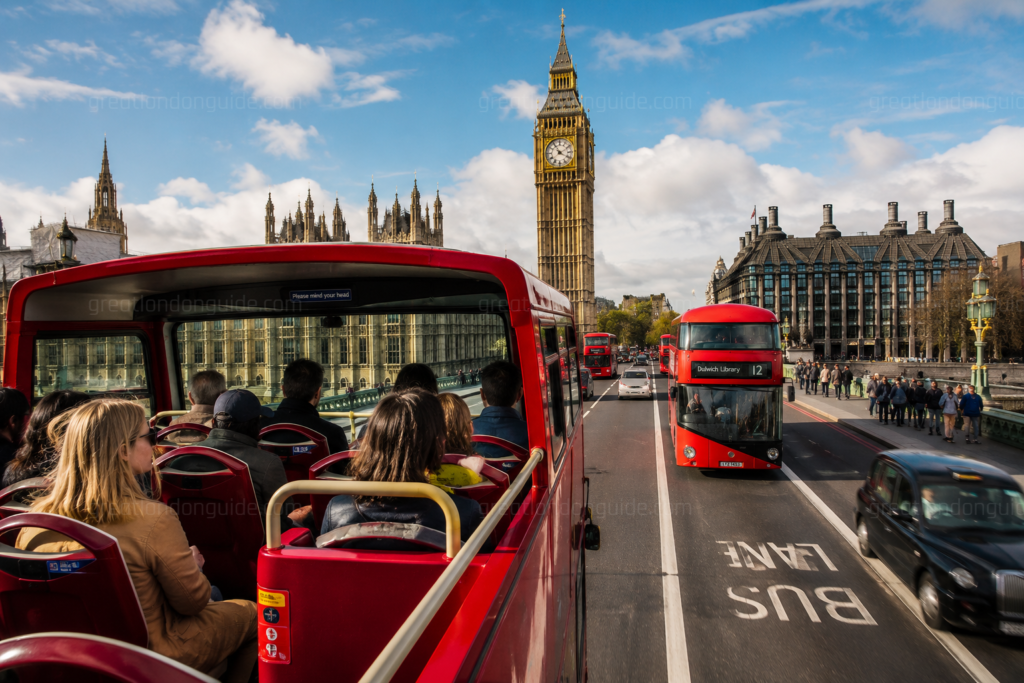
The red buses are not just for sightseeing photos. They are actually incredibly useful.
Buses can sometimes be slower than the Tube because of traffic, but they have one huge advantage: you can see the city while traveling. Sitting on the upper deck of a London bus is genuinely one of the nicest cheap sightseeing experiences in the city.
They are also surprisingly easy to use once you get comfortable with tapping on and off transport.
The Elizabeth Line
The Elizabeth Line is newer, faster, and more modern than much of the older Tube system.
Tourists often end up using it without even realizing it because it connects several important places, including:
- Heathrow Airport
- Paddington
- Bond Street
- Liverpool Street
- Canary Wharf
The trains are spacious, air-conditioned, and generally feel more like modern commuter rail than a traditional subway.
If you arrive at Heathrow, there is a very good chance the Elizabeth Line will become your new best friend.
National Rail
This is where many tourists start panicking unnecessarily.
National Rail simply refers to Britain’s wider train network outside the core Tube system. In practical terms, tourists usually encounter it when:
- traveling to outer London areas
- taking day trips
- arriving from other cities
- using certain airport routes
The important thing to understand is that you do not need to mentally separate everything while traveling around. In many cases, journey-planning apps treat Tube trains and National Rail services as one connected trip anyway.
“Wait… is this technically National Rail?”
Nobody cares. The app told you where to go. You go there.
London Overground
Despite the dramatic name, the London Overground is basically another urban train network serving different parts of the city.
The easiest way to think about it is this:
- the Tube mostly dominates central London
- the Overground helps connect outer areas
Many tourists barely use it unless visiting neighborhoods outside the main tourist core.
River Buses
Yes, London even has river transport along the River Thames.
These are more niche for most visitors, but they can be scenic and enjoyable, especially on a nice day. Think of them as part transportation, part sightseeing experience.
For most tourists, though, the Tube and buses will do the heavy lifting.
The Tube Is Simpler Than It Looks
The Tube map has a strange superpower. It can make intelligent adults suddenly feel like they are trying to decipher alien technology.
But here is the thing most tourists realize after a day or two: the map looks far more complicated than the actual experience of using it.
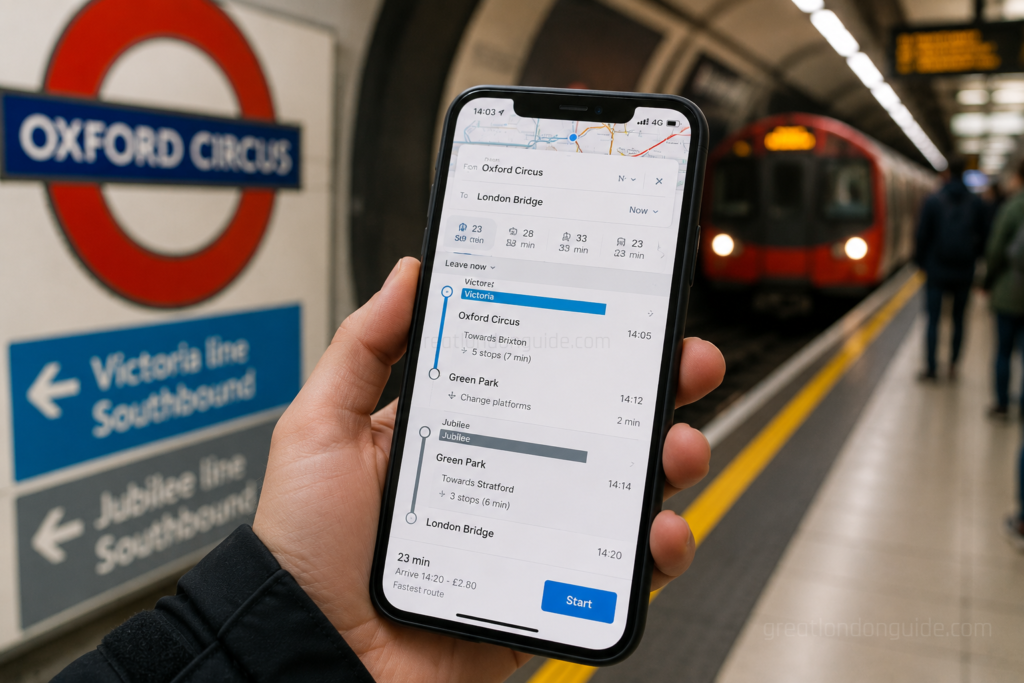
In reality, most trips are extremely straightforward.
You usually:
- open an app
- type where you want to go
- follow the suggested route
- tap into the station
- get on the train
- get off a few stops later
That is genuinely the process most of the time.
You do not need to memorize lines or station names before arriving. Modern navigation apps have changed everything. Google Maps and apps like Citymapper will tell you:
- which station to enter
- which line to take
- where to change trains
- how many stops to travel
- which exit to use
Sometimes they will even tell you which part of the train is best to board.
Frankly, the apps are now doing half the thinking for everybody.
Another thing that surprises visitors is how frequent the trains are in central London. On many lines, trains arrive every couple of minutes during the day. Unlike in some cities where missing a subway train feels catastrophic, in London it is usually more like:
“Oh well. Another one is coming in two minutes.”
Tube stations are also everywhere in central London. You are rarely very far from one. This means you do not need to obsess over finding the “perfect” route across the city.
Often there are multiple reasonable ways to reach the same destination.
Understanding Zones Without Getting a Headache
Zones are one of those things tourists worry about much more than they actually need to.
London is divided into travel zones numbered outward from the center:
- Zone 1 is central London
- Zone 2 surrounds it
- then the numbers keep increasing farther out
That is basically the core idea.
Now for the reassuring part: most tourists spend the majority of their time in Zones 1 and 2.
This includes many famous attractions such as:
- Buckingham Palace
- Big Ben
- Tower Bridge
- The British Museum
- Covent Garden
So while zones matter for fare calculations behind the scenes, tourists usually do not need to constantly think about them during normal sightseeing days.
Where zones become more relevant is airport travel.
For example:
- Heathrow Airport sits farther out
- some suburban areas sit in outer zones
- certain day trips may involve additional zones
But again, apps and contactless payment systems handle much of this automatically now.
You do not need to stand at a ticket machine trying to calculate Victorian-era fare mathematics.
London Transport Is One Connected Network
This is the mental shift that makes everything feel easier.
Tourists often imagine:
- the Tube as one thing
- buses as another
- trains as another
- walking as another
But London does not really work that way in practice.
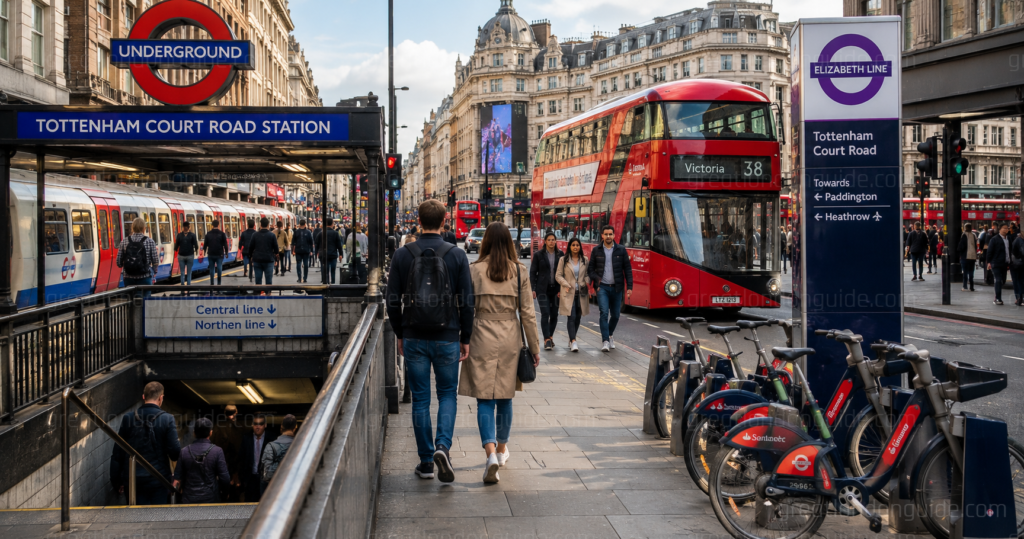
The city functions as one giant interconnected transport network.
You might:
- take the Tube somewhere
- walk for 10 minutes
- hop on a bus
- then take a train back later
And all of that can feel surprisingly seamless once you get used to it.
Journey-planning apps are designed around this idea too. They do not really care whether part of your trip uses a subway, a bus, or a train. They simply show you the fastest or easiest route.
That is why tourists often adapt faster than they expect.
You are not learning dozens of separate systems. You are learning one flexible network.
And once you understand that London transport is really one connected network, it starts feeling much less intimidating.
You stop trying to “master London transport” and instead start doing what locals and experienced visitors actually do: checking the app, tapping your card, and getting on with your day.
Which, honestly, is exactly how London works best.
Using London Transport in Real Life
Understanding the system is one thing. Actually using it while carrying luggage, checking directions on your phone, and wondering whether you just boarded the correct train is another.
The good news is that London transport usually becomes much easier the moment you actually start using it.
That sounds obvious, but it matters psychologically. A lot of visitors spend days worrying about the Tube map before their trip, then arrive in London and realize the experience is far more practical and intuitive than they expected.
Most journeys are not complicated adventures across a giant transit maze. They are usually simple little steps:
- walk to a station
- tap your card or phone
- follow signs
- ride a few stops
- get out
- walk to your destination
That is the rhythm of London travel for most tourists.
And after a few journeys, you stop feeling like somebody “using London transport” and start feeling like somebody simply moving around the city normally.
The Best Ways to Get Around London
One of the reasons London works so well for tourists is that different types of transportation are good at different things.
You do not need to use the Tube for absolutely everything. In fact, the best London days often involve mixing several forms of transportation together naturally.
Use the Tube for Speed
If you want to cross central London quickly, the Tube is usually the winner.
Traffic above ground can be slow, especially during busy periods, while Tube trains move underneath the city relatively quickly and frequently. This is why Londoners rely on it so heavily.
For example, if you want to travel between places like:
- King’s Cross Station
- Westminster
- Oxford Circus
- Covent Garden
the Tube is often the fastest option.
It is especially useful when:
- the weather is bad
- you are tired
- distances are longer than they look
- you want to save time during a busy sightseeing day
The important thing is not to overcomplicate it. You do not need to memorize lines beforehand. The apps will tell you which train to take.
Use Buses for Sightseeing
London buses are slower than the Tube, but they offer something the Tube cannot: you can actually see London while traveling.
This is one reason many tourists end up loving buses once they become comfortable with them.
From the upper deck of a bus, you can casually pass:
- historic buildings
- famous landmarks
- busy shopping streets
- parks
- neighborhoods you might never otherwise explore
And unlike the subway, you are not staring at tunnel walls the entire time.
Buses can also feel less intimidating for some visitors because they are above ground. You can physically see where you are going, which makes the city feel easier to understand.
They are particularly useful for shorter central London journeys where you are not in a massive hurry.
Honestly, some of the best accidental sightseeing moments in London happen from bus windows.
Walk More Than You Think
This surprises many first-time visitors.

Central London is often far more walkable than tourists expect.
On a map, places can look distant simply because London is such a famous and sprawling city. But once you are actually there, you realize many major attractions are relatively close together.
For example:
- Big Ben
- Westminster Abbey
- The London Eye
- Trafalgar Square
can all be connected fairly comfortably on foot.
This is important because tourists sometimes overuse the Tube unnecessarily. It is easy to fall into the habit of taking trains everywhere simply because the system exists.
But in central London, walking is often part of the experience.
You discover:
- side streets
- cafés
- parks
- architecture
- random little shops
- historic buildings you would otherwise miss underground
A very common and effective London strategy is:
- Tube for long distances
- walking for short distances
- buses when you want a slower scenic journey
That combination works beautifully for many visitors.
Use Trains for Longer Trips
For places farther outside central London, trains become more useful.
This might include:
- airport journeys
- outer neighborhoods
- day trips
- destinations beyond the main tourist core
The good news is that you often do not need to think too hard about the distinction between “train” and “Tube.” Modern apps handle most of that complexity for you automatically.
From a tourist perspective, it usually just feels like:
“the app told me to get on this train.”
And that is completely fine.
The Apps Do Most of the Work Now
This is probably the single most reassuring thing modern tourists should know: you do not need to manually plan routes around London anymore.
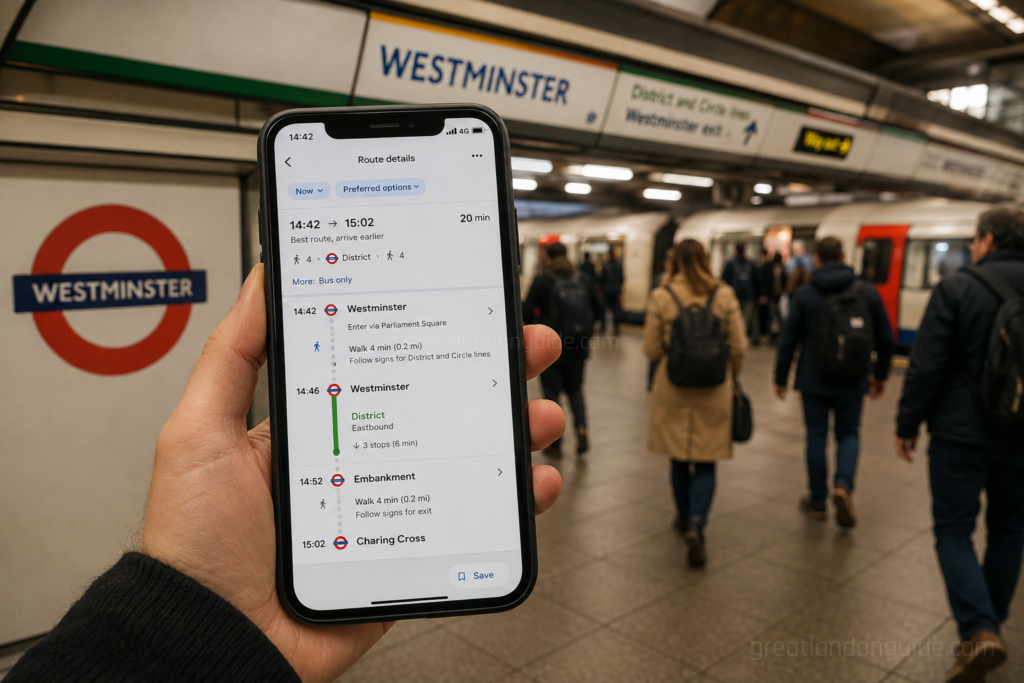
Seriously. This is not 1998.
You do not need to stand under a giant map desperately tracing colored lines with your finger while pretending you totally understand what “eastbound platform” means.
Apps now handle almost everything.
Google Maps
Google Maps works extremely well in London and is enough for many visitors.
It can show:
- Tube routes
- bus routes
- walking directions
- train connections
- travel times
- live updates
For many tourists, this is all they ever use during their trip.
Citymapper
Citymapper is especially popular in London and many travelers end up loving it.
It is designed heavily around public transportation and often provides extremely detailed guidance, including:
- which station entrance to use
- which train car is best
- where to stand on platforms
- real-time delays
- walking shortcuts
It can feel almost absurdly helpful at times.
Many nervous travelers find Citymapper especially reassuring because it breaks journeys into simple, manageable steps instead of making everything feel overwhelming.
The psychological effect here matters.
You are not expected to know London instinctively. You are using tools built specifically to guide people around giant cities efficiently.
That is normal.
The Best Times to Travel Around London
London transport changes character throughout the day.
Sometimes it feels calm and manageable. Other times it feels like the entire population of Britain collectively decided to sprint through one station at the exact same moment.
Rush Hour
Rush hour is when commuters travel to and from work.
Typically:
- mornings are busiest roughly between 7:00–9:30 AM
- evenings are busiest roughly between 4:30–6:30 PM
During these periods:
- trains become crowded
- stations move faster
- escalators fill up quickly
- people are usually less relaxed
This does not mean tourists should panic or avoid transport completely. Millions of people still travel perfectly fine during rush hour.
But if you are new to London and want a calmer experience, avoiding the busiest commuting windows can make your first few days much more pleasant.
Midday Is Often Easier
For tourists, late morning through mid-afternoon is usually the sweet spot.
Around midday:
- trains are calmer
- stations feel less rushed
- there is more space
- navigating becomes easier
- you can move at your own pace more comfortably
This is especially useful if:
- you are traveling with children
- you are nervous about public transportation
- you are carrying luggage
- you simply want a less stressful experience
Honestly, London feels like a different city outside peak commuting times.
Airport Connections Are Easier Than They Look
Airport transport is another thing many visitors worry about too much before arriving.
London’s airports are very well connected overall, especially compared to many cities around the world.
Heathrow Airport
Heathrow Airport has several transport options into central London.
The main ones tourists usually encounter are:
- the Elizabeth Line
- the Heathrow Express
- the Tube
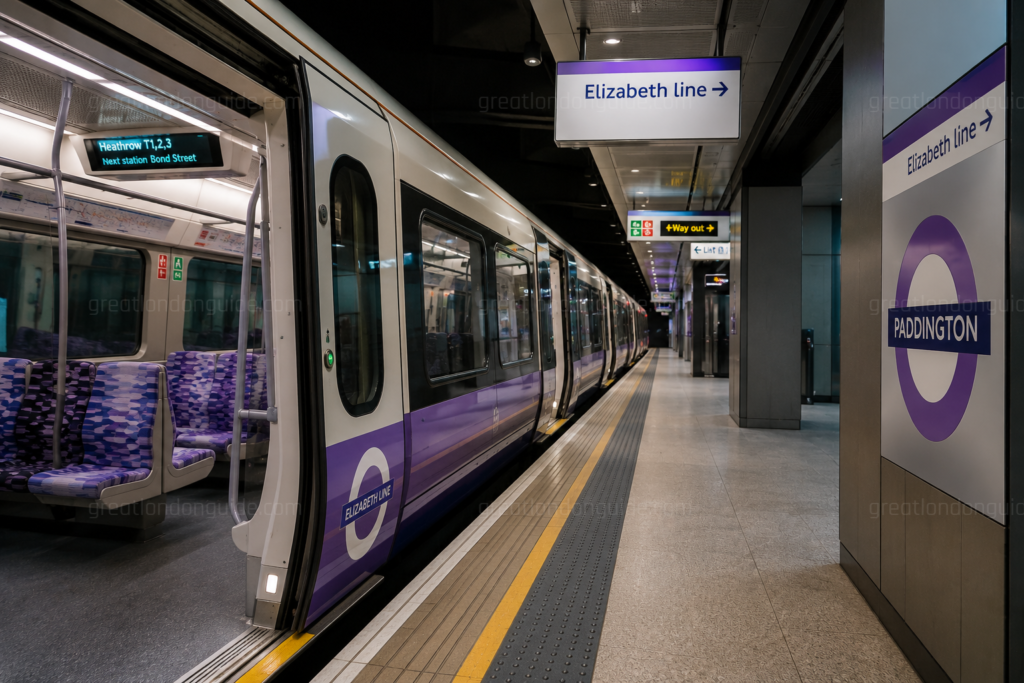
Each has different advantages depending on budget, speed, and destination.
The important thing for now is simply understanding that Heathrow is easy to reach by public transportation. You do not need to immediately budget for expensive taxis.
Gatwick Airport
Gatwick Airport also has direct train connections into London.
Many tourists use:
- the Gatwick Express
- regular commuter rail services
Again, the apps will guide you through this very clearly when the time comes.
We will cover airport transportation in much more detail later because there are definitely ways to save money and avoid unnecessary confusion.
For now, though, the key takeaway is simple: London is built around public transportation, and that includes its airports.
You are rarely as stranded as you think you are.
And once you successfully complete your first airport journey into the city, your confidence with London transport usually increases dramatically.
Because after that first trip, the system stops feeling like a mystery and starts feeling like something you can actually use.
Paying for London Transport Without Stressing About It
For many visitors, especially Americans arriving in London for the first time, the most intimidating part of the transport system is not actually the trains.
It is the payment system.
People worry about:
- whether their card will work
- whether they need special tickets
- accidentally buying the wrong fare
- getting fined
- being massively overcharged
- standing confused in front of a ticket machine while a line quietly forms behind them
The reassuring news is that paying for London transport is much easier than it used to be, and honestly much easier than many tourists expect before arriving.
Years ago, visitors often had to research complicated ticket options in advance, preload special cards, and figure out strange fare rules before they could travel confidently. Today, most tourists can simply use the same contactless bank card or phone they already use at home.
That is it.
You tap in.
You travel.
You tap out when needed.
The system calculates the fare automatically.
Once people realize this, a huge amount of anxiety disappears almost instantly.
Contactless Payment Is Usually the Easiest Option
For most tourists visiting London today, contactless payment is the simplest and best option.
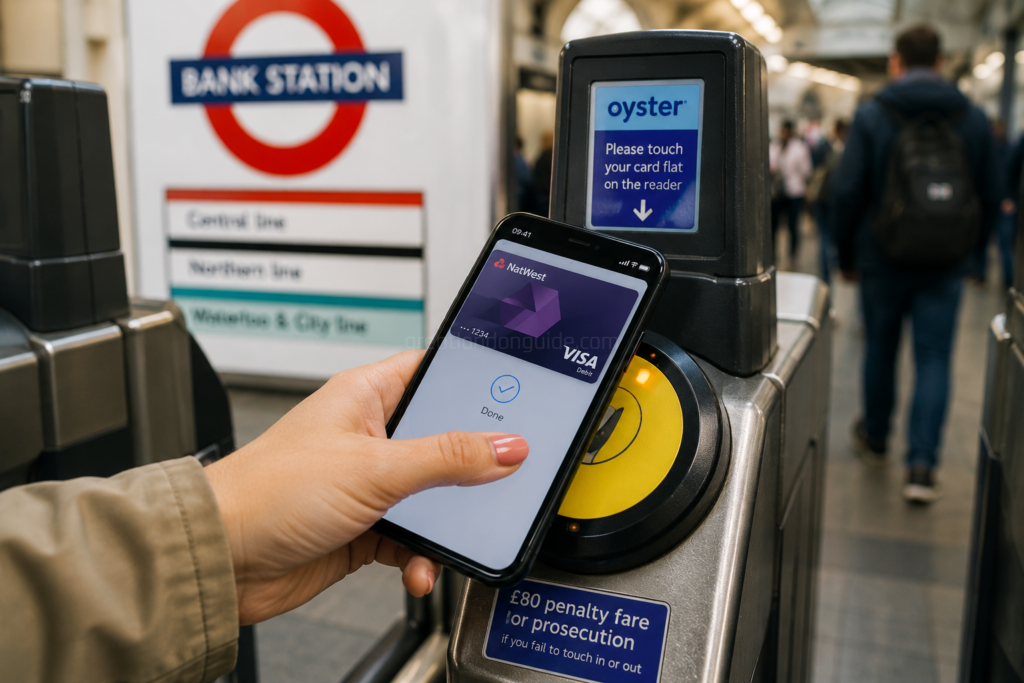
“Contactless” basically means tapping a payment method rather than inserting it into a machine. This can include:
- tap-to-pay bank cards
- Apple Pay
- Google Pay
- phone wallets
- smart watches
If you already tap your phone or card to pay for coffee, groceries, or restaurants at home, you already understand the basic idea.
And yes, American cards usually work perfectly fine as long as they support contactless payment and do not have international restrictions placed on them by the bank.
This is one of the biggest mental shifts visitors need to make: you usually do not need to buy traditional paper tickets in London anymore.
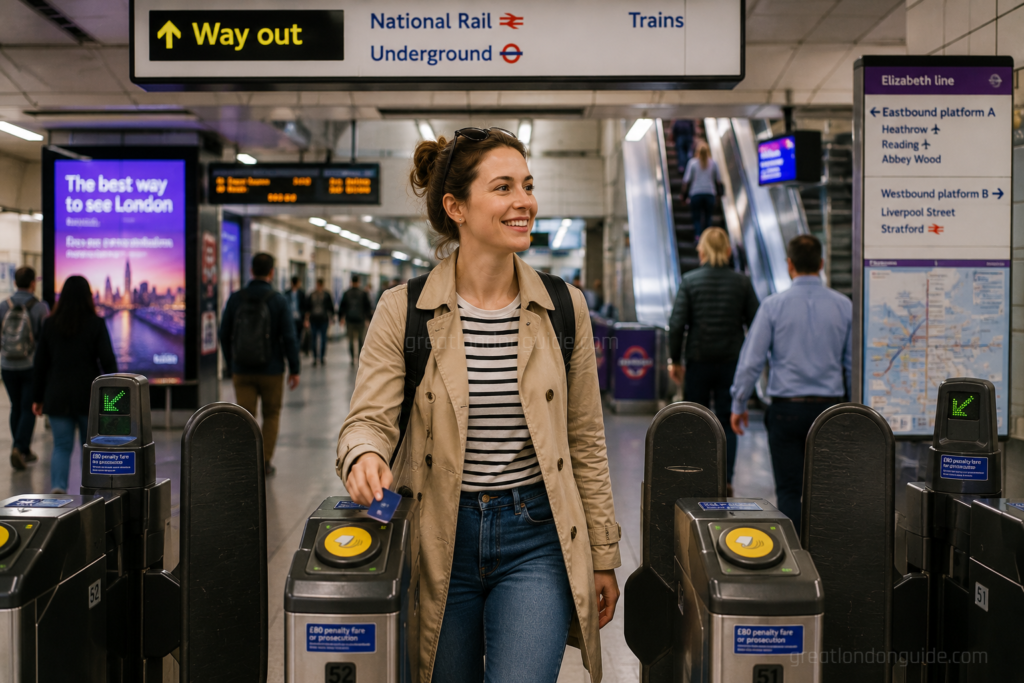
Instead, you simply tap your card or phone on the yellow reader at the station gate or on the bus, and the system records your journey automatically.
It feels surprisingly normal after about five minutes.
In fact, many tourists end up laughing afterward because they spent weeks worrying about tickets and fare systems only to discover they were basically just tapping their iPhone against a reader like they were buying a snack.
Why Contactless Is So Convenient
The reason contactless works so well for tourists is because it removes a huge amount of decision-making.
You do not need to:
- calculate most fares manually
- decide which ticket type to buy
- preload exact amounts
- stand at ticket machines every morning
- understand complicated pricing structures immediately
The system handles most of that behind the scenes automatically.
That means you can focus more on:
- sightseeing
- navigating
- enjoying the city
- figuring out which side of the escalator to stand on before causing commuter rage
London transport has essentially evolved around the assumption that many people now travel using contactless payment.
And honestly, for most visitors, that is fantastic news.
So What Exactly Is an Oyster Card?
At some point while researching London, you will almost certainly hear people talking about Oyster cards.
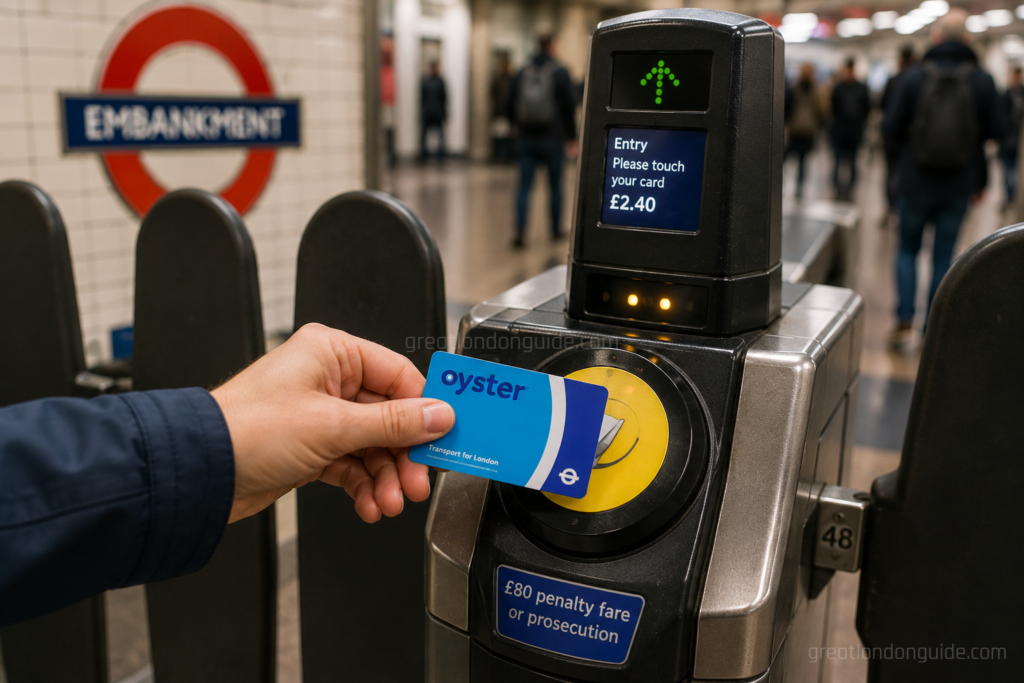
This often makes tourists think:
“Oh no. Is this another thing I need to buy and understand?”
Probably not.
An Oyster card is a reusable smart travel card used on London public transportation. Before contactless bank cards became widespread, Oyster cards were the main easy way to travel around the city electronically.
They still exist. They still work well. Plenty of people still use them.
But many tourists no longer actually need one.
Who Might Still Benefit From an Oyster Card?
An Oyster card can still make sense in certain situations, such as:
- visitors without contactless bank cards
- travelers whose banks charge heavy foreign transaction fees
- children using transport
- people who prefer separating travel spending from their main bank account
- longer stays where travel discounts may matter more
Some tourists also simply feel psychologically more comfortable using a dedicated transport card instead of their personal bank card, which is perfectly understandable.
Why Many Tourists Skip Oyster Cards Now
For shorter trips, though, many visitors find contactless payment easier because there is less setup involved.
You do not need to:
- buy the card
- top it up constantly
- worry about remaining balance
- refund leftover credit afterward
Instead, your regular payment method handles everything automatically.
This is one of those areas where older travel advice online can accidentally confuse people. You will still find articles acting as though every tourist absolutely must buy an Oyster card immediately upon arrival.
That advice made much more sense ten or fifteen years ago than it does today.
Now, for many visitors, contactless payment is simply smoother and easier.
You Do Not Need to Calculate Every Fare
This is another major reassurance point because tourists often assume London transportation works like some giant pricing puzzle where one wrong move will financially ruin them.
Fortunately, the system is far more forgiving than many people expect.
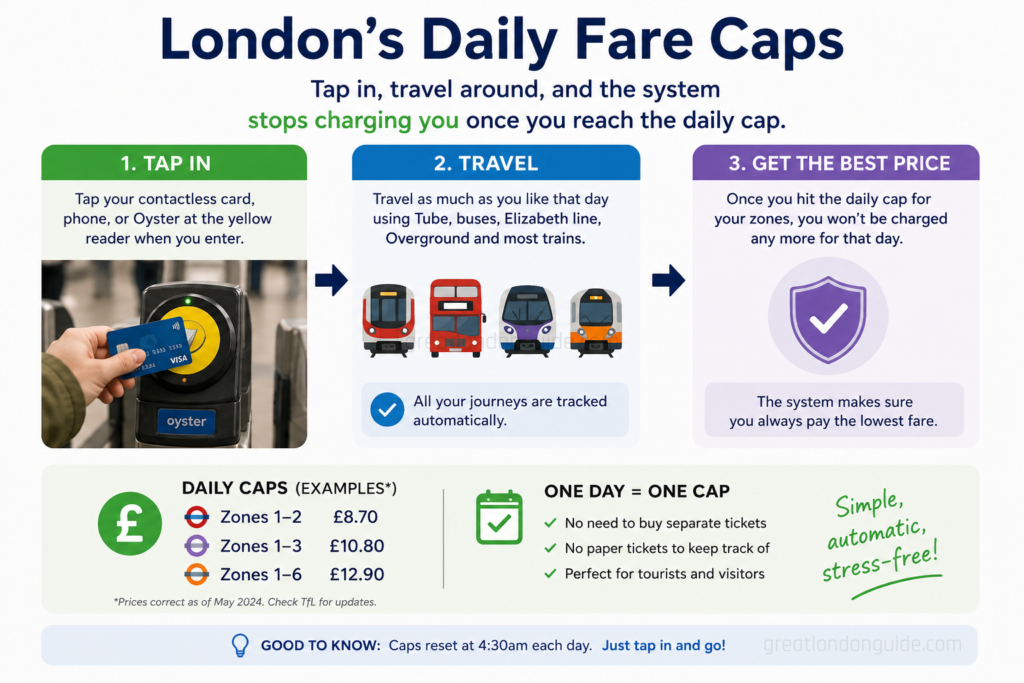
London transport uses something called fare capping.
The simple version is this: there is a daily maximum amount you will pay for travel within certain zones using contactless payment or Oyster.
Once you hit that cap, additional eligible journeys that day are effectively free.
And the best part is that the system calculates this automatically.
You do not need to:
- track every journey manually
- constantly add up costs
- decide in advance whether a travel pass is worth it
- perform emergency math underground while a train arrives behind you
The system handles the calculations itself.
Why Daily Caps Matter So Much for Tourists
This feature removes a huge amount of stress because visitors can simply travel naturally without obsessing over every ride.
You can:
- hop on a Tube train
- take a bus later
- change plans
- explore spontaneously
- decide to visit another neighborhood
without constantly worrying:
“Am I accidentally spending a fortune right now?”
For many tourists, this makes London feel much more approachable.
The transport system is designed around flexibility rather than punishing people for not planning perfectly.
Common Tourist Payment Mistakes
Now for the reassuring version of the “things to avoid” section.
None of these mistakes are catastrophic. Tourists make them constantly. London staff are very used to it.
But knowing about them beforehand can save confusion later.
Using Different Cards During One Journey
This is probably the most common mistake.
For example:
- entering with a physical bank card
- exiting with Apple Pay
- or switching devices halfway through the journey
Even though they may connect to the same bank account, the system sees them as different payment methods.
So London transport may think:
- one journey never ended
- another journey never properly started
Which can sometimes lead to incomplete fares being charged.
The easy solution is simply consistency: use the same payment method for both the start and end of a journey.
Forgetting to Tap Out
On buses, you only tap once when boarding.
But on most Tube and train journeys, you tap both:
- entering the station
- leaving the station
If you forget to tap out, the system may assume you made a much longer journey and charge a higher incomplete fare.
Again, this sounds scarier than it usually is. Many tourists do this accidentally once or twice while learning the system.
And after your first day or two, tapping in and out becomes almost automatic muscle memory.
Multiple People Using the Same Card
Another common misunderstanding is assuming one contactless card can pay for multiple travelers at the same time.
It cannot.
Each traveler needs:
- their own card
- their own phone wallet
- or their own Oyster card
This is because the system needs to track individual journeys separately.
Families sometimes discover this dramatically at station gates while trying to pass one card backward like they are sneaking into a concert.
London transport is unfortunately prepared for this strategy.
The Important Thing to Remember
You do not need to become an expert in London fares to travel around confidently.
That is the real takeaway here.
Modern London transport is designed to work quickly for millions of ordinary people, including huge numbers of tourists who have never visited the city before. The combination of contactless payment, automatic fare capping, navigation apps, and integrated transport systems means the experience is far more user-friendly than many visitors expect before arriving.
Within a surprisingly short time, tapping into stations and moving around the city starts feeling routine instead of intimidating.
And once that happens, London itself begins to open up in a completely different way, because you stop worrying about the mechanics of transportation and start focusing on where you actually want to go.
Feeling Safe and Confident on London Transport

By the time most tourists have spent a day or two using transport in London, something interesting usually happens.
The system starts shrinking emotionally.
What initially felt enormous, chaotic, and intimidating gradually becomes familiar. Stations stop looking like giant underground labyrinths and start feeling more like recognizable landmarks. The Tube map begins turning from abstract spaghetti into actual places connected to memories, cafés, museums, parks, and neighborhoods you have now physically visited.
That shift happens faster than many people expect.
But before it does, there are usually a few lingering fears sitting quietly in the background:
- “What if I get lost?”
- “What if I get on the wrong train?”
- “What if I look stupid?”
- “What if I cannot understand the announcements?”
- “What if something goes wrong and I have no idea what to do?”
These worries are extremely normal, especially if you are visiting a large international city for the first time. And honestly, London transport can look intense from the outside because the city moves quickly and the stations are busy.
The reassuring reality, though, is that millions of ordinary people navigate London successfully every day, including enormous numbers of tourists who arrived knowing absolutely nothing beforehand.
And yes, that includes people who confidently boarded the wrong train at least once on day one.
Is London Transport Safe?
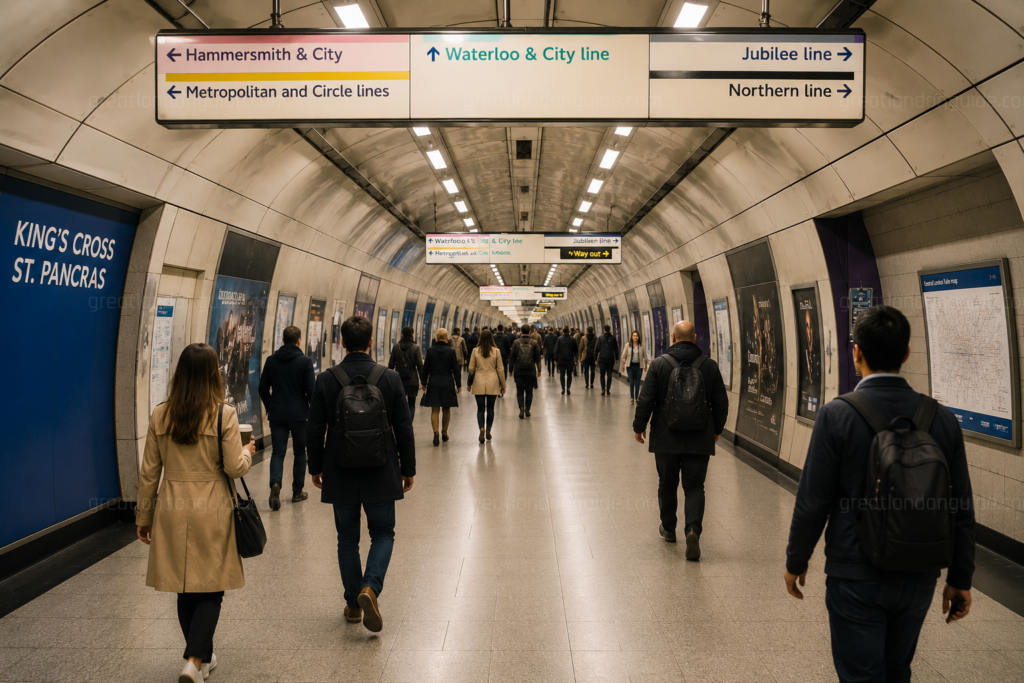
Overall, London public transportation is generally considered very safe, especially in the areas most tourists spend time using it.
The network is:
- heavily used
- busy throughout much of the day
- monitored by cameras
- staffed at major stations
- filled with commuters, visitors, families, and travelers
For many tourists, one of the surprising things about London is just how normal public transportation feels within everyday life. People use the Tube and buses constantly. Office workers use them. Teenagers use them. Families use them. Tourists use them. Elderly Londoners use them.
Public transportation is simply woven deeply into how the city functions.
That does not mean London is a magical crime-free utopia where nothing bad ever happens, because no major city in the world works like that. Basic city awareness still matters, particularly in crowded places where pickpocketing can occasionally happen.
But the atmosphere most tourists actually experience is usually far more ordinary and routine than the scary mental image they built beforehand.
In practice, many visitors quickly realize:
“Oh. This just feels like a busy city.”
Because that is really what it is.
Practical Safety Habits Without Becoming Paranoid
You do not need to spend your trip clutching your belongings like a spy carrying government secrets.
Simple common-sense habits are usually enough:
- keep an eye on your phone and wallet
- avoid leaving bags unattended
- stay aware in crowded areas
- be cautious late at night in unfamiliar places
That is essentially the same advice you would follow in New York, Chicago, Paris, Toronto, or any other major international city.
And because stations are usually busy and active, many tourists actually end up feeling safer than they expected.
Tube Etiquette Is Easier Than People Make It Sound
Before visiting London, some tourists accidentally convince themselves that Tube etiquette is governed by an ancient unwritten rulebook guarded by angry commuters.
In reality, the social expectations are pretty simple.
Nobody expects tourists to behave perfectly.
That said, there are a few customs that help everything flow more smoothly and prevent you from accidentally becoming the villain of somebody’s Monday morning commute.
Stand on the Right on Escalators
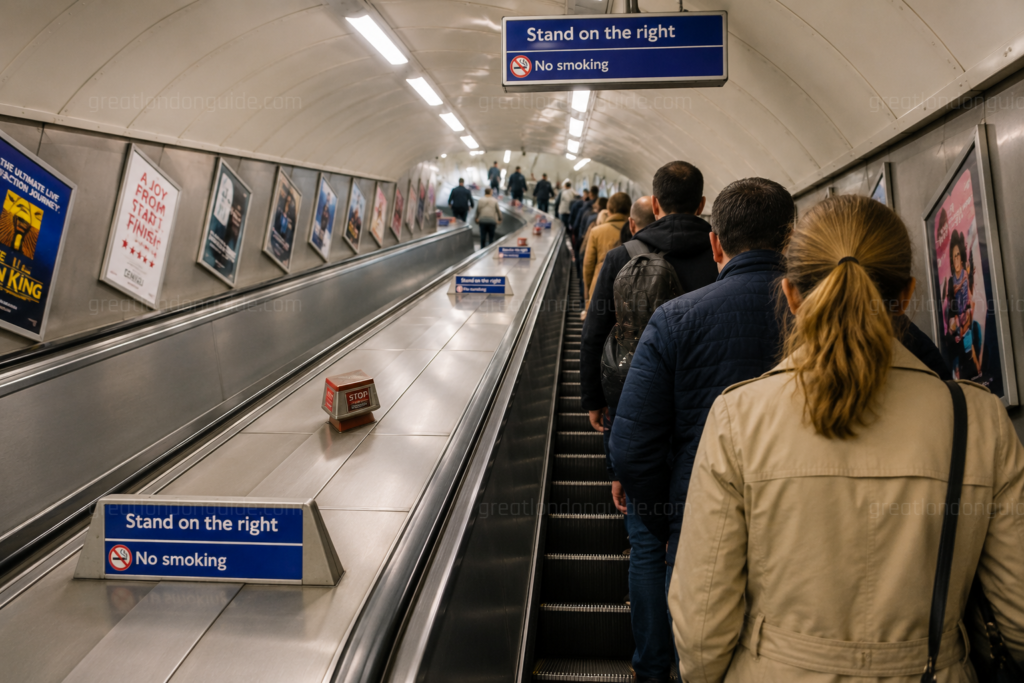
This is probably the most famous London transport rule.
On escalators:
- stand on the right
- walk on the left
And yes, Londoners take this surprisingly seriously.
If you stand still on the left side during a busy period, there is a decent chance an exhausted commuter will appear behind you with the energy of somebody trying to escape a collapsing building.
The good news is that the rule is very easy to follow once you know it.
Let People Off Before Boarding
When trains arrive, people exiting should leave first before new passengers board.
Again, this is not unique to London, but stations run much more smoothly when everybody follows the same flow.
And honestly, once you see how many people pour out of some Tube carriages during rush hour, the logic becomes very obvious very quickly.
Avoid Blocking Doors
If the train is crowded, try not to stop directly in the doorway unless necessary.
Sometimes people need to step briefly off the train at busy stations to let others exit before stepping back on again. This can look mildly alarming the first time you see it happen.
Do not panic. Nobody is abandoning you on the platform forever.
It is just part of how crowded urban transit works.
The Most Common Tourist Fears Are Completely Normal
One of the best things you can know before visiting London is that nearly every tourist worry has already happened to millions of other people before you.
People get lost.
People miss stops.
People board the wrong train.
People misunderstand announcements.
People accidentally exit through the wrong station exit and emerge three blocks from where they expected.
And life continues normally.
“What If I Get Lost?”
You probably will at some point, at least briefly.
And honestly, that is part of visiting almost any major city.
The difference today is that smartphones make getting “seriously lost” much harder than it used to be. Usually it means something more like:
“Hm. I think I took the wrong exit.”
Then you check the map, walk five minutes, and continue your day.
London is not a wilderness expedition. You are surrounded by streets, signs, shops, buses, stations, and navigation apps constantly.
“What If I Board the Wrong Train?”
This also happens all the time.
The important thing to understand is that making a small transport mistake in London is rarely catastrophic. Usually it just costs:
- a few extra minutes
- one additional stop
- a short correction using the next train
The city is so interconnected that fixing mistakes is normally straightforward.
And after you correct one small mistake successfully, your confidence usually increases dramatically because you realize:
“Oh. Even when something goes slightly wrong, it is manageable.”
“What If I Cannot Understand the Announcements?”
London station announcements can sometimes sound like somebody speaking through a sandwich underwater while standing inside a wind tunnel.
This is not your fault.
Fortunately, modern transport is incredibly visual now. Between:
- digital station signs
- route maps
- apps
- onboard displays
- platform indicators
you usually do not need to rely entirely on audio announcements anyway.
In fact, many locals barely pay attention to them unless there is a disruption.
Things That Often Surprise American Tourists
Certain aspects of London transport catch American visitors off guard, even when they have researched the city beforehand.
Usually these surprises are not bad. They are simply different.
There Is More Walking Than Many Americans Expect
Even when using transportation constantly, London often involves a surprising amount of walking.
Tube stations themselves can be enormous, with:
- long corridors
- tunnels
- staircases
- escalators
- multiple exits
Sometimes reaching the platform feels like you are descending into a beautifully organized underground civilization.
Comfortable shoes are genuinely important in London.
Stations Can Be Huge
Major stations such as:
- Waterloo Station
- King’s Cross Station
- Victoria Station
can initially feel overwhelming because of their size and the sheer number of people moving through them.
But once you slow down mentally and follow the signs step by step, they become much more manageable.
The key is not trying to absorb the entire station at once.
Contactless Payment Feels Extremely Normal
Many American tourists are surprised by how little interaction happens around ticketing.
There are often:
- no paper tickets
- no ticket agents checking every person
- no long purchasing process
- no dramatic barriers to entry
People simply tap and move.
London transport is designed around keeping enormous numbers of people flowing efficiently through the city, so the system often feels fast and surprisingly low-friction.
Confidence Builds Faster Than You Think
This is probably the most important thing to remember from this entire guide.
Tourists adapt quickly.
Far more quickly than they usually expect before arriving.
At the beginning of a trip, London transport can feel emotionally oversized because everything is unfamiliar at once:
- the map
- the stations
- the payment system
- the pace
- the terminology
- the crowds
But human beings are remarkably good at adapting to patterns.
And London transport is full of patterns.
Within days, many visitors suddenly notice they are:
- recognizing station names
- understanding signs automatically
- navigating without overthinking
- switching lines confidently
- tapping in without hesitation
- giving directions to other tourists
That transformation happens all the time.
Not because visitors become transport experts overnight, but because the system starts feeling familiar instead of foreign.
And once that happens, London itself becomes much more enjoyable, because you stop worrying constantly about how to move around and start focusing on what you came to see in the first place.
Final Thoughts: London Transport Is Easier Than It Looks
If there is one thing to remember from this entire guide, it is that you do not need to “master” London transport in order to use it successfully.
That is probably the biggest misconception first-time visitors have before arriving in London. People often imagine they need to memorize the Tube map, understand every train line, learn complicated fare systems, or somehow think like a lifelong London commuter before they can confidently move around the city.
In reality, most tourists learn the basics surprisingly quickly.
Modern London transport is built around helping enormous numbers of ordinary people move around efficiently every single day, including visitors who have never set foot in Britain before. Between contactless payment, journey-planning apps, clear signage, and the sheer number of transport connections across the city, getting around is usually much more straightforward than people fear beforehand.
And honestly, after your first few journeys, you will probably notice something funny happening: the system starts feeling normal.
Station names that initially sounded intimidating suddenly become familiar. The Tube map stops looking like abstract chaos and starts feeling like a collection of places you actually recognize. Even little things, like tapping through station gates or changing lines underground, begin to feel routine surprisingly fast.
That confidence grows naturally.
You do not wake up one morning transformed into a London transport expert. Instead, you slowly stop overthinking every small decision because the city starts making sense through experience.
You will also quickly realize that London transport is not just practical. It becomes part of the experience of visiting the city itself.
Some days you will race across town on the Tube to save time before a museum closes. Other days you will sit on the upper deck of a red bus watching the city roll past outside the window while wondering why every British street somehow looks like a movie set. You will walk more than expected, discover random side streets accidentally, and eventually develop favorite stations, favorite neighborhoods, and favorite routes through the city.
That is when London starts feeling less like a giant intimidating capital and more like a place you actually know how to navigate.
And that is the real goal here.
Not perfection.
Not expertise.
Not memorizing transport diagrams like you are preparing for a final exam.
Just confidence.
Because once you stop feeling intimidated by transportation, London opens up dramatically. Suddenly the city feels accessible instead of overwhelming, and you become much more willing to explore neighborhoods, attractions, parks, museums, markets, and areas beyond the obvious tourist checklist.
So if you are still feeling nervous before your trip, take a breath.

Millions of tourists successfully use London transport every year, including huge numbers of people who initially felt exactly the same way you do now. Most of them adapt faster than they expected, and there is a very good chance you will too.
London transport may look complicated at first, but before long it usually becomes one of the easiest and most useful parts of visiting the city.
Useful Resources for London Transport
If you want additional help planning routes, understanding fares, checking live disruptions, or learning more about London transportation before your trip, these official and tourist-friendly resources are genuinely useful.
Official Transport for London Resources
- Transport for London – Visiting London Guide
- TfL – Best Ways for Visitors to Pay
- TfL Visitor Shop
- TfL Go App
- TfL Travel Tools & Live Updates
- TfL Visitor Centres
Tourist-Friendly London Guides
- Visit London – Public Transport in London
- Visit London – Getting Around London
- Visit London – London Underground Explained
- VisitLondon Visitor Information Centres
- VisitBritain – Travelling Around Britain
- VisitBritain – London Transport Tickets & Passes